
Authors
- Larisa
Wedding invitations, RSVP and save the date

The guest list is where weddings get expensive and families get tense, often in the same afternoon. The mistake almost everyone makes is starting with names. You start with a number, and you let the number protect you from the conversations you do not want to have.
Step 1: Set the number before the names
Two things cap your guest list: how many people your venue holds, and how much each guest costs you. Pick a target inside both limits and treat it as fixed. Every guest is a plate and a chair, so the list is really a budget line in disguise. The wedding budget guide shows how per-guest cost works, and your venue choice sets the ceiling.
Step 2: Build in tiers, not all at once
Listing everyone you know and then cutting is emotionally brutal. Build up instead, in three tiers:
- Tier A: non-negotiable. Immediate family, the people you cannot imagine the day without.
- Tier B: want them there. Close friends, the relatives you actually see, the wedding party.
- Tier C: if there is room. Colleagues, wider family, plus-ones, the "it would be nice" names.
Fill A first, then B, then C until you hit your number. Where you stop is your list. No one gets cut, because no one was ever counted in beyond the line.
Both partners build separately, then merge
Each of you drafts your A and B tiers alone, then you combine. It surfaces the must-haves honestly and stops one person's list quietly swallowing the whole headcount.
Step 3: Agree the rules up front
Most guest-list fights are really about inconsistent rules. Decide these once, write them down, and apply them to everyone:
- Children: invited, not invited, or family only. Pick one and hold it. The wording for this is in adults-only wording.
- Plus-ones: who gets one and who does not. Our rule is in how to handle plus-ones.
- Colleagues: all of the team or none. Half a team is how office resentment starts.
- The "we met them once" test: if neither of you has spoken to them in a year, they are Tier C at best.
Step 4: Estimate who will actually come
Your invite count is not your headcount. A share of invitees always decline. Use a reply rate to see the real number you are planning for.
A local wedding might land near 85 percent attendance, a destination far lower. Plan the room and the catering around the expected number, not the invitations sent.
Step 5: Capture the details you will need later
Build your list with more than names. For each guest, note the side, the tier, whether they get a plus-one, and how you will reach them, by WhatsApp, email, or text. This is the same data you will use to send invitations and, later, to seat people. Collect it once, cleanly.
Visual table planner
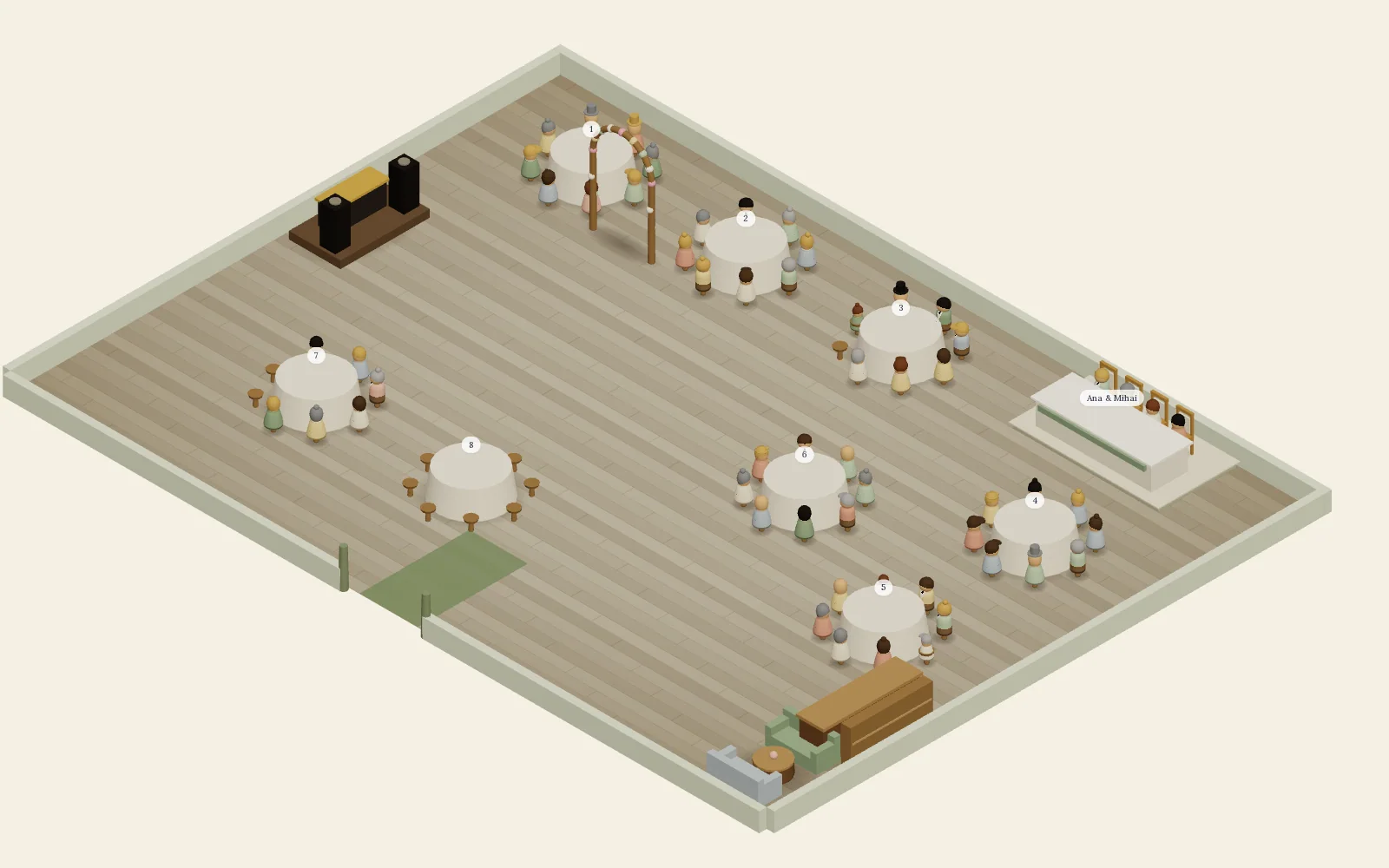
Turn this guest list into a seating plan you can see
Every guest who says yes on your Saventify invitation appears in a 3D room drawn to your venue's size. Drag each one onto a chair, or auto-seat everyone with families kept together, and each guest's table comes back in the guest Excel. Included in the one-time price of the invitation, with no separate seating app to buy.
Included with every published invitation
When you have to cut
If the list overshoots, cut from Tier C, and cut by rule rather than by name. "No colleagues" or "family children only" is a policy, defensible and impersonal. "We didn't invite you specifically" is a wound. Rules protect friendships. Individual decisions do not.
This list feeds straight into the rest of the system: tracking RSVPs, then building the seating plan. The whole flow lives in our guest list and RSVP guide.
Turn your list into invitations
Send each guest a personalised invitation and collect headcount, dietary notes and replies in one place.
Create your invitation

About the author
Wedding invitations, RSVP and save the date
Larisa writes the Saventify wedding guides. She covers digital invitations, save the dates, RSVP, guest lists and the templates couples actually send.
All articles by Larisa