

Wedding invitation wording trips couples up because they reach for a voice that is not theirs. They write "request the honour of your presence" while planning a barefoot beach lunch, and the words and the day disagree. The reader feels it. Good wording is not about being formal or casual. It is about the words telling the truth about the wedding underneath them.
This guide covers the structure every invitation needs, the etiquette that still matters, and how to make it sound like the two of you. The deep dives are linked throughout.
The five things every invitation must say
Strip away the style and every wedding invitation answers five questions:
- Who is getting married (and, if relevant, who is hosting)
- What the event is (ceremony, reception, or both)
- When it happens, date and time
- Where it is, venue and how to find it
- What you need back, the RSVP and its deadline
Everything else, the dress code, the schedule, a line about children, is supporting detail. Get the five right and the invitation works even if the prose is plain. Get the prose beautiful and the five wrong and you will spend the week before the wedding answering texts.
Find the voice before the words
Pick the register that matches your day, then write inside it. A short quiz to place yourself:
Who hosts, and how to name them
Traditionally the hosts, often the bride's parents, were named first and the couple second. Today most couples host themselves or share it, and the wording reflects that. The honest move is to name whoever is genuinely hosting.
| Situation | Opening line |
|---|---|
| Couple hosts | "Together with full hearts, [Name] and [Name] invite you..." |
| Both families host | "Together with their families, [Name] and [Name]..." |
| One side hosts | "[Parents' names] request the pleasure of your company at the wedding of..." |
| Blended families | "[Name] and [Name], together with their families, invite you..." |
This gets genuinely delicate when families are blended or several parties host. We handle that case fully in wording when families are blended or both host.
The etiquette that still matters
Most Victorian rules are gone. A few survive because they save feelings:
- Name the invited guests precisely. Who is named is who is invited, which is how you signal plus-ones and children without a separate note. See how to handle plus-ones.
- Put the dress code on the invitation, not in a separate message. The wording for this is in dress code wording on invitations.
- Say adults-only kindly, if that is your choice. There is a graceful way, covered in adults-only wedding wording.
Read it as a guest, not as the couple
Before you finalise, read the invitation as if you were a guest who knows nothing. Can you tell who is getting married, when, where, and what to do next? If a single one of those is unclear, fix it before you worry about a comma.
Ready-to-use examples
You do not have to write from scratch. We have a library of openings, full templates, and closing lines organised by register in wedding invitation wording examples. Lift one, then adjust it until it sounds spoken rather than printed.
Wording for a screen is different
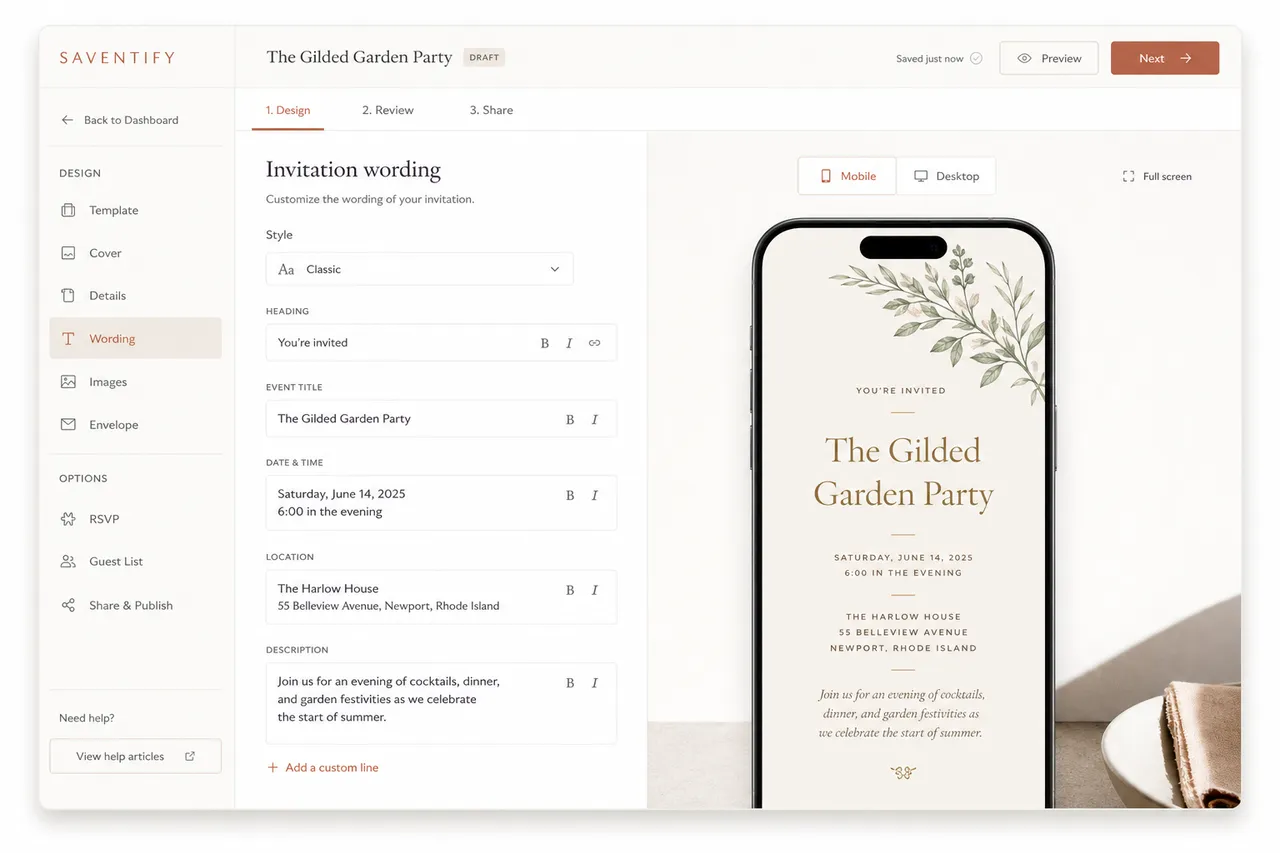
A digital invitation reads on a phone, in a scroll, not on heavy card held in two hands. Long centred formal blocks that look grand on paper feel heavy on a screen. The phrasing shortens, the rhythm changes, and the RSVP wording does real work. We cover the specifics in how to word a digital invitation.
Carry the voice from the start
Your save-the-date sets the tone first, so the invitation should sound like the same couple wrote it. And the words should agree with the look you chose in wedding invitation styles and formats. When all three agree, the invitation feels composed rather than assembled.
The short version
- Answer five questions: who, what, when, where, and what you need back
- Pick a voice that matches the day and stay in it
- Name hosts and guests honestly, that is most of the etiquette
- Write shorter for the screen, and make the RSVP wording clear
- Lift an example, then make it sound like you
When the words are right, put them somewhere they can move.
Put your words in a template
Pick a template, add your wording and preview it on a phone before you send.
Create your invitation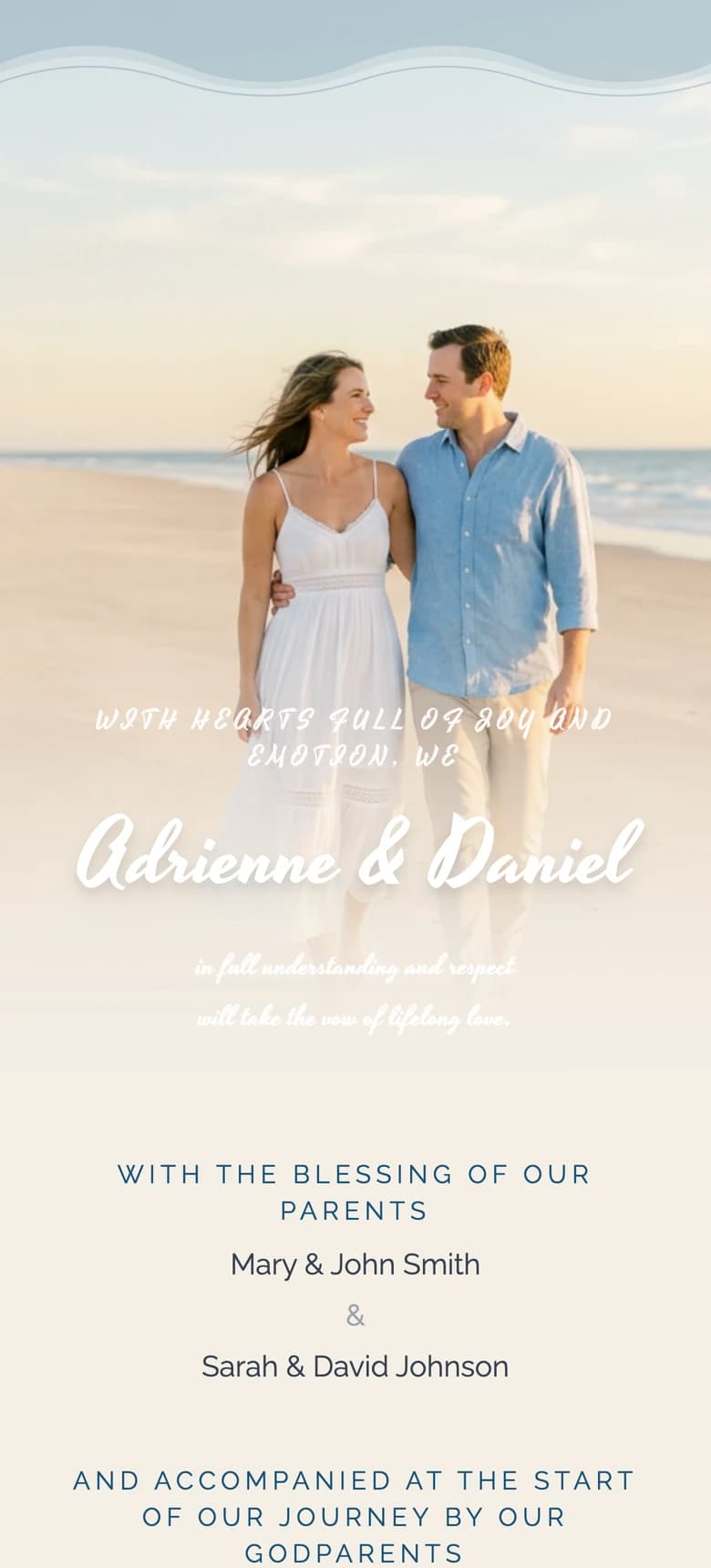

About the author
Wedding invitations, RSVP and save the date
Larisa writes the Saventify wedding guides. She covers digital invitations, save the dates, RSVP, guest lists and the templates couples actually send.
All articles by Larisa